

The idea of straighter teeth is appealing to a great many people. The idea of wearing visible metal brackets for a year or two to achieve them is considerably less so, particularly for adults managing professional and social lives where appearance matters. Invisalign has changed this conversation significantly, offering a route to orthodontic improvement that most people around you will never even notice. But comfort, discretion, and impressive results are a lot to promise from a set of clear plastic aligners, so it is well worth understanding exactly how Invisalign delivers on all three.
What Makes Invisalign Different From Traditional Braces?
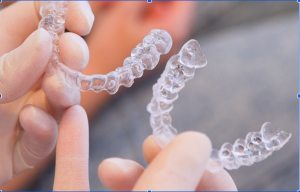
The fundamental difference is straightforward. Traditional fixed braces use metal brackets bonded to the teeth, connected by wires that are periodically tightened to move the teeth into the desired position. Invisalign uses a series of custom-made, clear plastic aligners — each one slightly different from the last, that you wear over your teeth and change approximately every one to two weeks as your treatment progresses.
The Practical Differences This Creates
| Factor | Fixed Braces | Invisalign |
| Visibility during treatment | Clearly visible metal brackets | Virtually invisible when worn |
| Removability | Cannot be removed | Removed for eating, drinking, and cleaning |
| Dietary restrictions | Yes — certain foods must be avoided | None, remove the aligners before eating |
| Cleaning your teeth | More complex around brackets and wires | Normal brushing and flossing with aligners out |
| Comfort | Initial discomfort after adjustments | Gentle, progressive pressure from each aligner |
| Appointment frequency | Regular visits for wire adjustments | Check-up appointments typically less frequent |
The Comfort Story: What Wearing Invisalign Actually Feels Like
One of the most common questions people have about Invisalign in London is what it actually feels like to wear. The honest answer is, for most patients, surprisingly comfortable.
The First Few Days With a New Aligner
Each time you move to a new aligner in the series, there is a period of mild pressure as the aligner begins to work on the next stage of movement. This typically lasts two to three days and is described by most patients as a sense of firmness or tightness rather than pain. It is a sign that the aligner is doing exactly what it is designed to do.
By the time you are approaching the end of each aligner’s wear period, it tends to feel comfortable and familiar, which is also when it is working least actively, making the transition to the next aligner the right clinical moment.
What Makes Invisalign More Comfortable Than Braces for Many Patients
- No metal brackets or wires to irritate the soft tissue of the cheeks and lips
- Smooth plastic edges that are custom fitted to each patient’s teeth
- The ability to remove the aligners for special occasions, sports, or moments where comfort is a priority
- No emergency appointments for broken brackets or wires that need immediate attention
The Appearance Question: How Invisible Is Invisible?
Let us be straightforward about this. Invisalign aligners are not completely undetectable in every lighting condition and at every angle, but they are remarkably discreet for the vast majority of everyday situations.
When Invisalign Is Effectively Invisible
- In normal conversation at a typical social distance, most people will not notice the aligners at all
- In professional settings, photographs, and video calls, the aligners are rarely visible
- In reasonably lit indoor environments, the clear plastic blends with the tooth surface effectively
When People Might Notice
- In very close-up, well-lit photographs
- If someone specifically asks you to open your mouth and looks closely
- Immediately after fitting a new aligner, when slight speech adjustment is still happening
For the vast majority of adults seeking orthodontic treatment with Invisalign in London, this level of discretion is entirely sufficient, and considerably more comfortable to live with than the visibility of fixed brackets.
The Results: What Can Invisalign Actually Treat?
A dentist in Wokingham will begin with an honest assessment of whether Invisalign is the right treatment for your specific orthodontic needs. Invisalign has expanded its clinical capability significantly over the years and now treats a much wider range of cases than it did when it was first introduced. However, it is not the right choice for every orthodontic situation, and a good dentist will make that clear during your consultation.
Cases Where Invisalign Typically Performs Very Well
- Mild to moderate crowding: where teeth are overlapping or misaligned
- Spacing issues: gaps between teeth that need closing
- Mild bite corrections: such as minor overbite or underbite adjustments
- Relapse cases: where previous orthodontic treatment results have shifted over time
Cases That May Be Better Suited to Fixed Braces
- Severe crowding requiring very significant tooth movement
- Complex bite corrections involving substantial vertical or rotational change
- Cases where extremely precise torque control is clinically critical
- Patients who are unlikely to maintain the recommended twenty-two hours of daily wear, since compliance directly affects results
A thorough initial assessment with a dentist in Wokingham or an Invisalign-trained clinician in London will give you a clear, honest picture of which category your case falls into.
The Digital Treatment Planning Advantage
One of the genuinely impressive aspects of Invisalign in London is how the treatment planning process works. Before you commit to anything, your clinician uses digital scanning technology to create a three-dimensional model of your teeth and generate a simulation of how they are expected to move during treatment.
What This Means for You as a Patient
- View a digital preview of your expected smile before treatment begins
- Receive a personalised treatment plan with an estimated timeline
- Discuss and refine the planned outcome before aligners are made
- Follow a structured treatment plan with clear milestones
How to Make Sure Your Results Last
Finishing Invisalign treatment is only part of the process. Long-term results depend on wearing your retainers as advised.
What Retention Typically Involves
- A fixed retainer bonded behind the front teeth
- A removable retainer worn as instructed
- Regular review appointments to check retention
Consistent retainer use helps maintain your new smile and reduces the risk of teeth gradually shifting back over time.
Conclusion
Invisalign represents a genuinely impressive combination of clinical effectiveness, everyday comfort, and aesthetic discretion, making it the orthodontic choice that suits a great many adult patients who might otherwise have avoided treatment entirely. Whether the clinical case is straightforward or more involved, the starting point is always a thorough, honest assessment that confirms whether Invisalign is the right path for your specific situation. Perfect Smile provides exactly this kind of patient-centred Invisalign assessment, helping patients achieve straighter, healthier smiles in a way that fits comfortably around real life.